Section 1 of 4
The Galleries
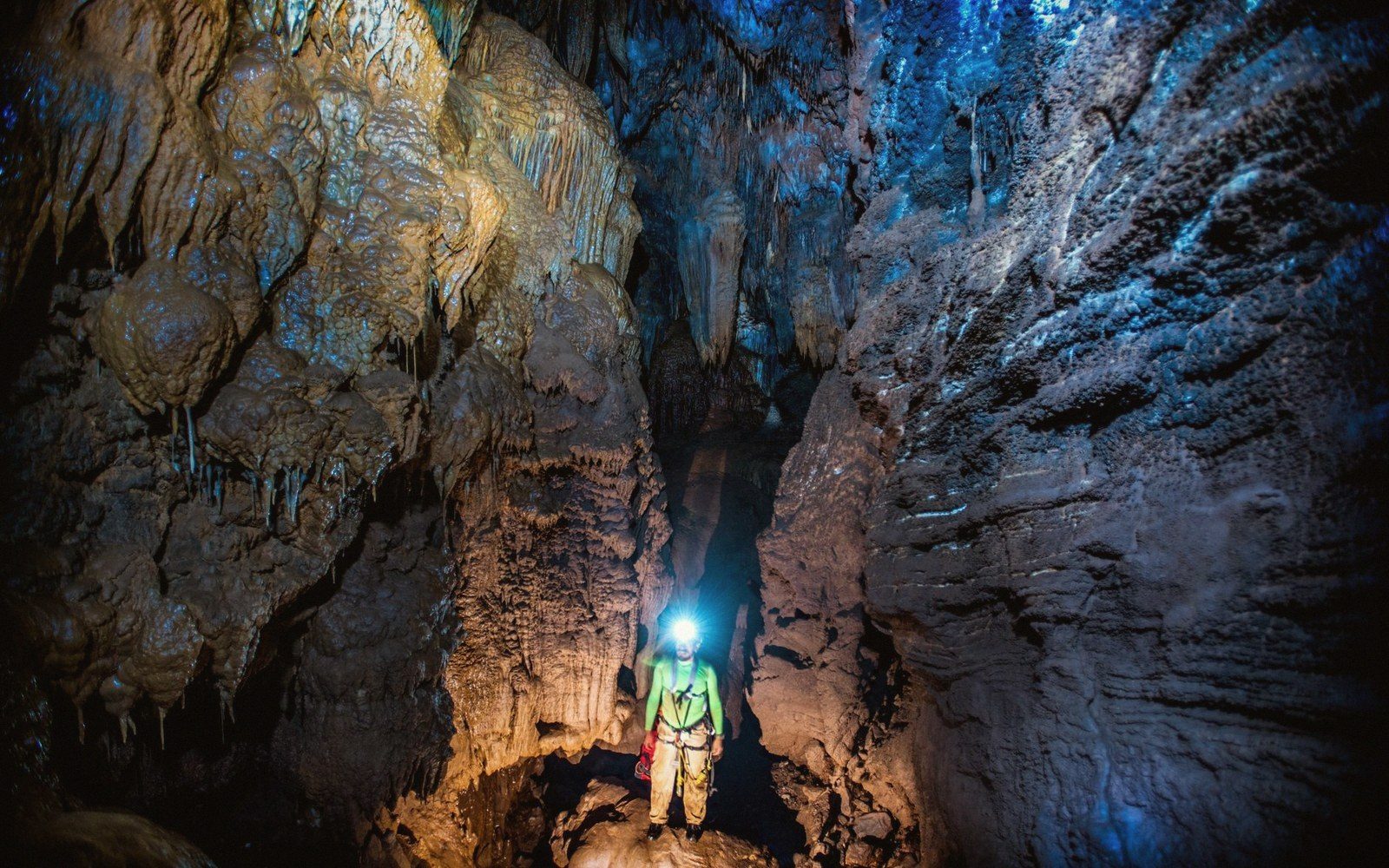
The stone was taken from directly beneath the streets, room by room, with columns of rock left in place to hold the roof. What remains is a subdivided underground landscape: parallel galleries, cross-drives, pillars judged by eye, and a temperature so steady that the voids became cellars the moment extraction stopped.
- The town stands on its own quarryThe stone was taken from directly beneath the streets, leaving a worked-out level that is now cellar, mushroom bed and store. What was left standing, and why.
- Pillars left standingRoom-and-pillar by eye: how much rock had to stay to hold the roof.
- Saw marks at hand heightParallel kerfs left by hand saws, and what they say about the working method.
- The constant temperatureWhy a worked-out gallery is a cellar without any effort.
- What galleries becameWine, mushrooms, storage and shelter — successive uses of the same void.
- CollapseWhere the pillars were cut too thin, and what the surface shows afterwards.