What the walls record
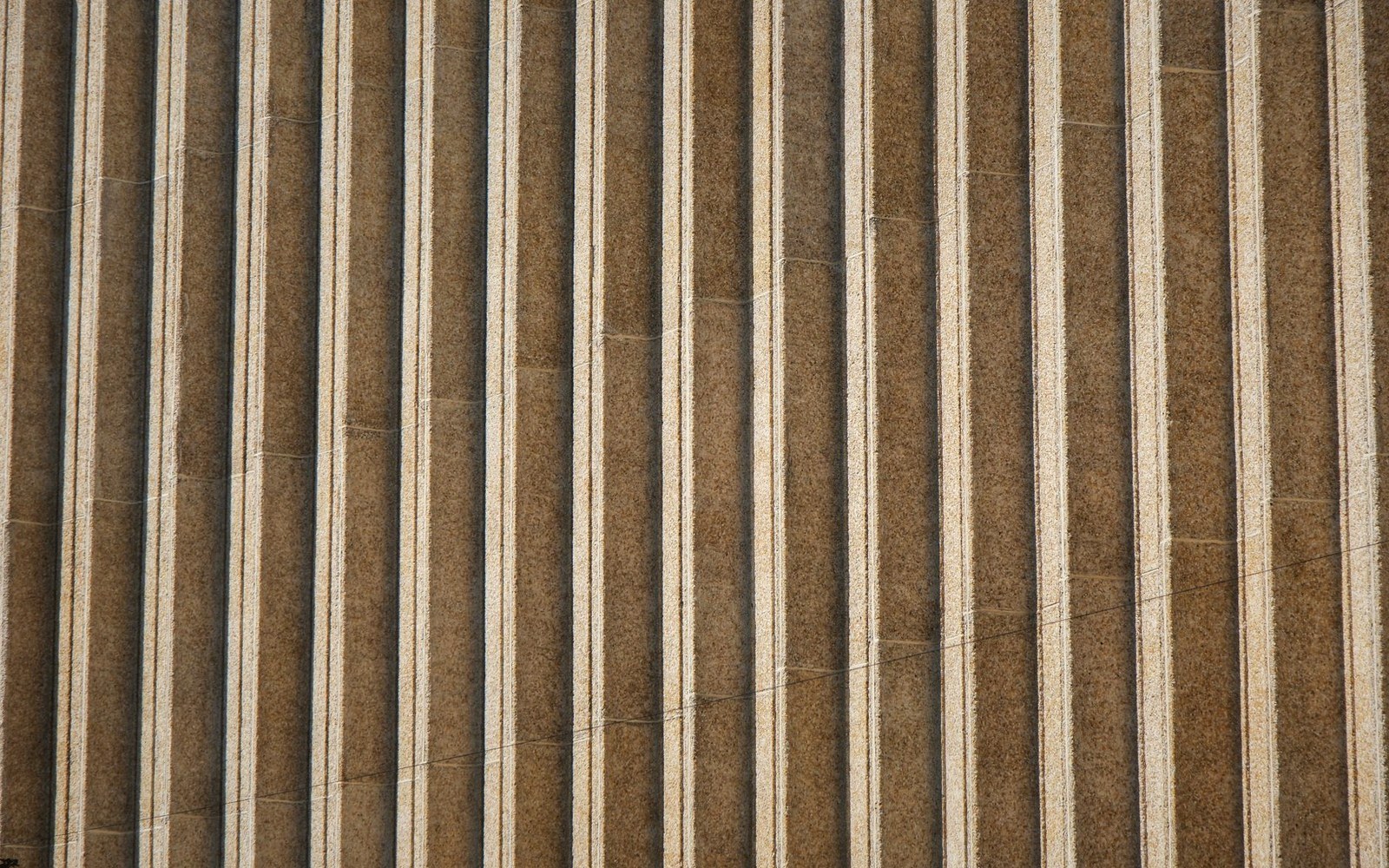
Run a hand along the gallery wall and you will feel them before you see them: parallel grooves, roughly a centimetre apart, cut diagonally across the face at a consistent angle. These are saw kerfs — the entry paths of a hand-operated frame saw drawn repeatedly across the same limestone. They are not decoration and not accident. They are the frozen record of a working method.
The angle of the kerfs is the angle of the cut stroke. A cutter standing square to the face and drawing the saw downward leaves marks that slope one way; one working from the side leaves marks that slope another. At Bourg, the kerfs cluster at a height between roughly waist and shoulder — the ergonomic sweet spot where a two-handled saw can be pushed and pulled with full body weight behind it. Below that band the stone was undercut with a narrower tool; above it, the same logic in reverse. The pattern repeats bay after bay, which means the same trained movement, the same body height, probably the same team working the same face over years.
The stone itself made this possible. Freshly quarried calcaire (limestone) from these beds is soft enough to saw by hand — it cuts easily when new and hardens only on exposure to air. That combination of workability at the face and durability in use is why the hand saw was the right tool, and why the evidence it left has survived so well. The same surface that recorded the cut has since stabilised, neither crumbling nor recrystallising enough to erase the marks.
What you are looking at, in other words, is not ruin and not ornament. It is a productivity record — a body at work, repeated thousands of times, pressed into the face of the hill. The pillars left standing beside these walls are simply what remained when the cutting stopped; the saw marks on them were made along the way. Both are still there.
What you are looking at, in other words, is not ruin and not ornament.