When the margin was too thin, the ground remembers
Room-and-pillar quarrying is a wager. The quarryman takes as much stone as the roof will permit, leaving pillars of the parent rock — piliers en masse — to carry the weight above. Get the ratio right and the gallery stands indefinitely. Shave the pillars too thin, chase the last profitable block, and the arithmetic catches up, sometimes centuries later.
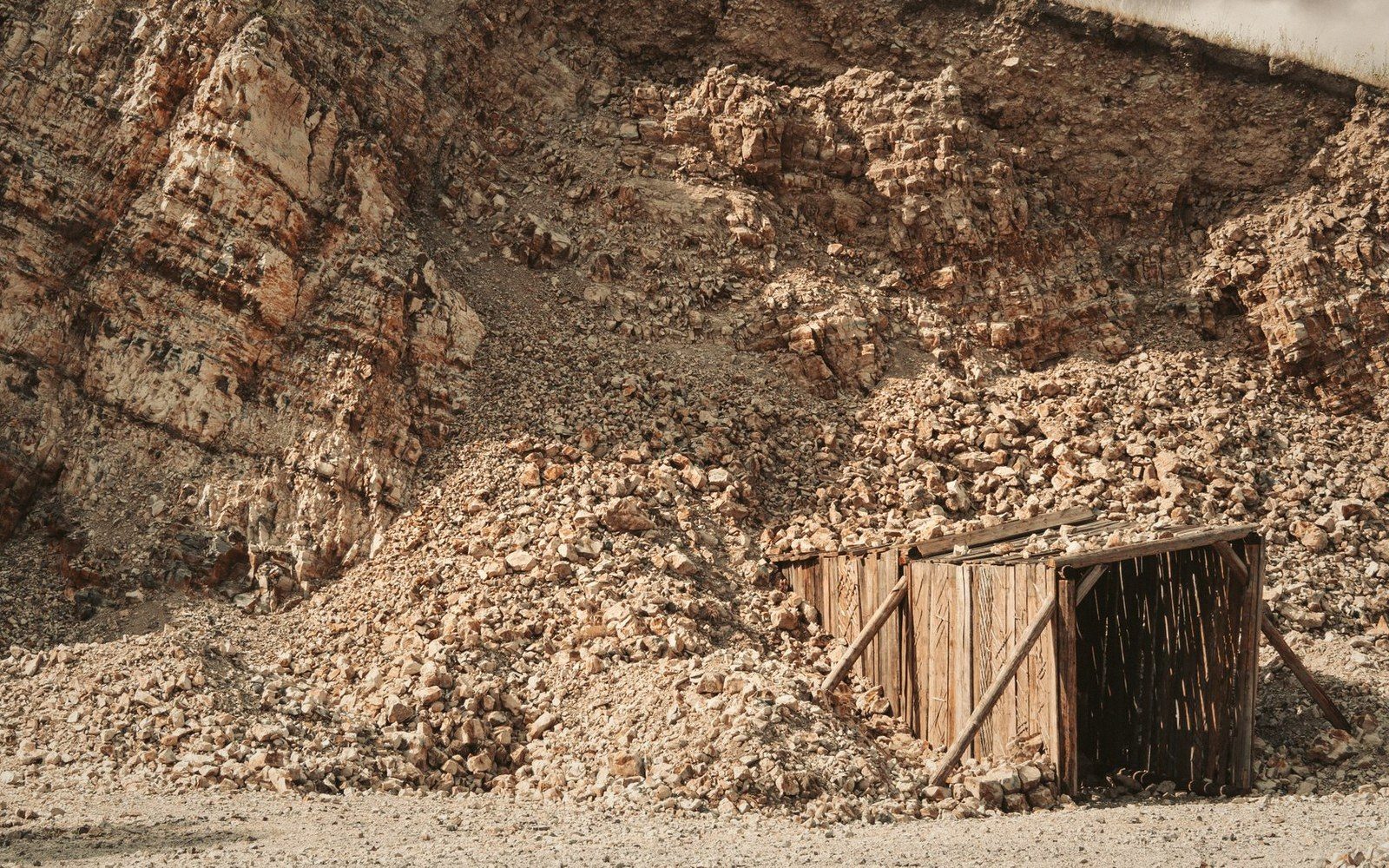
At Bourg, the worked level sits close enough to the surface that a failed pillar does not dissipate its load gradually — it transmits it. The sequence is abrupt: pillar yields, roof arch loses its abutment, the void migrates upward through the overburden, and the ground above either cracks or drops. The surface expression can be a linear fissure following a gallery wall, a shallow depression cupped in the soil, or — at the far end of the scale — a sudden subsidence pit with near-vertical sides. In the limestone towns of the Gironde and beyond, these pits are called fontis, a term used by engineers and insurers alike, and they can open without warning.
What preceded the failure is usually legible underground. Surviving photographs and survey records from comparable Aquitaine sites show pillars that have been robbed — trimmed after initial extraction when prices were good or when a quarryman returned for a second pass. A pillar reduced to half its intended section carries a quarter of the load it was designed for. Spalling, horizontal cracks running through the stone at mid-height, and the forward lean of a pillar toward the void are the signs that room-and-pillar judgement had reached its limit.
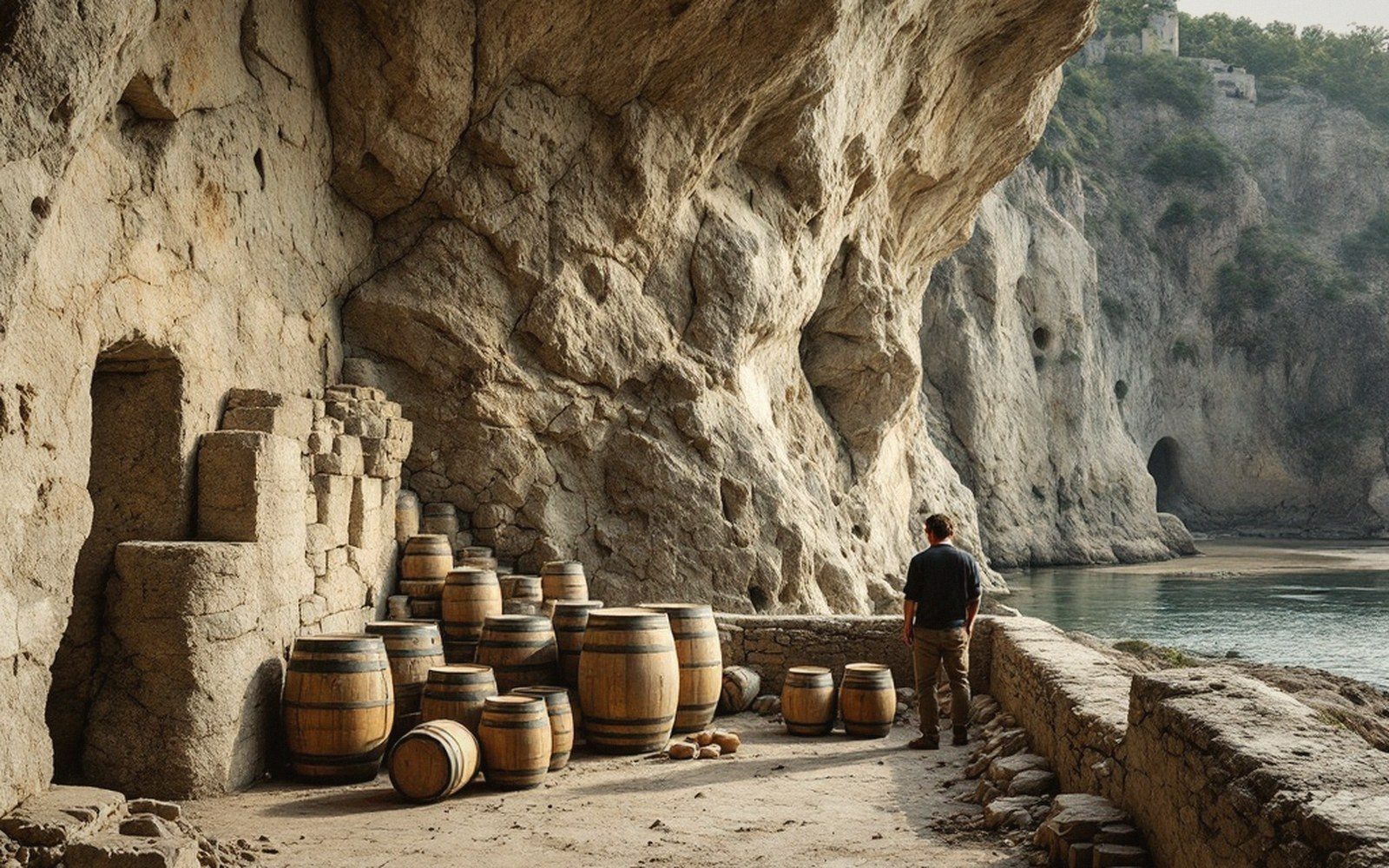
The surface at Bourg does not broadcast its voids. The town's streets and gardens look settled, but the citadel quarter occupies ground that has been worked beneath. A depression in a terrace, a crack in a garden wall that no one can explain by subsidence alone, a cellar floor that sounds hollow beyond its intended extent — these are the quiet signals. Not every anomaly is a fontis in formation; some reflect older collapses that have long since re-equilibrated. But the category cannot be dismissed, and the survey work that would resolve the uncertainty has never been completed comprehensively.

The stone left Bourg by barge and built a city. What remained was absence — absence held up by pillars that were always the minimum the job required, and occasionally less than that.
some reflect older collapses that have long since re-equilibrated.