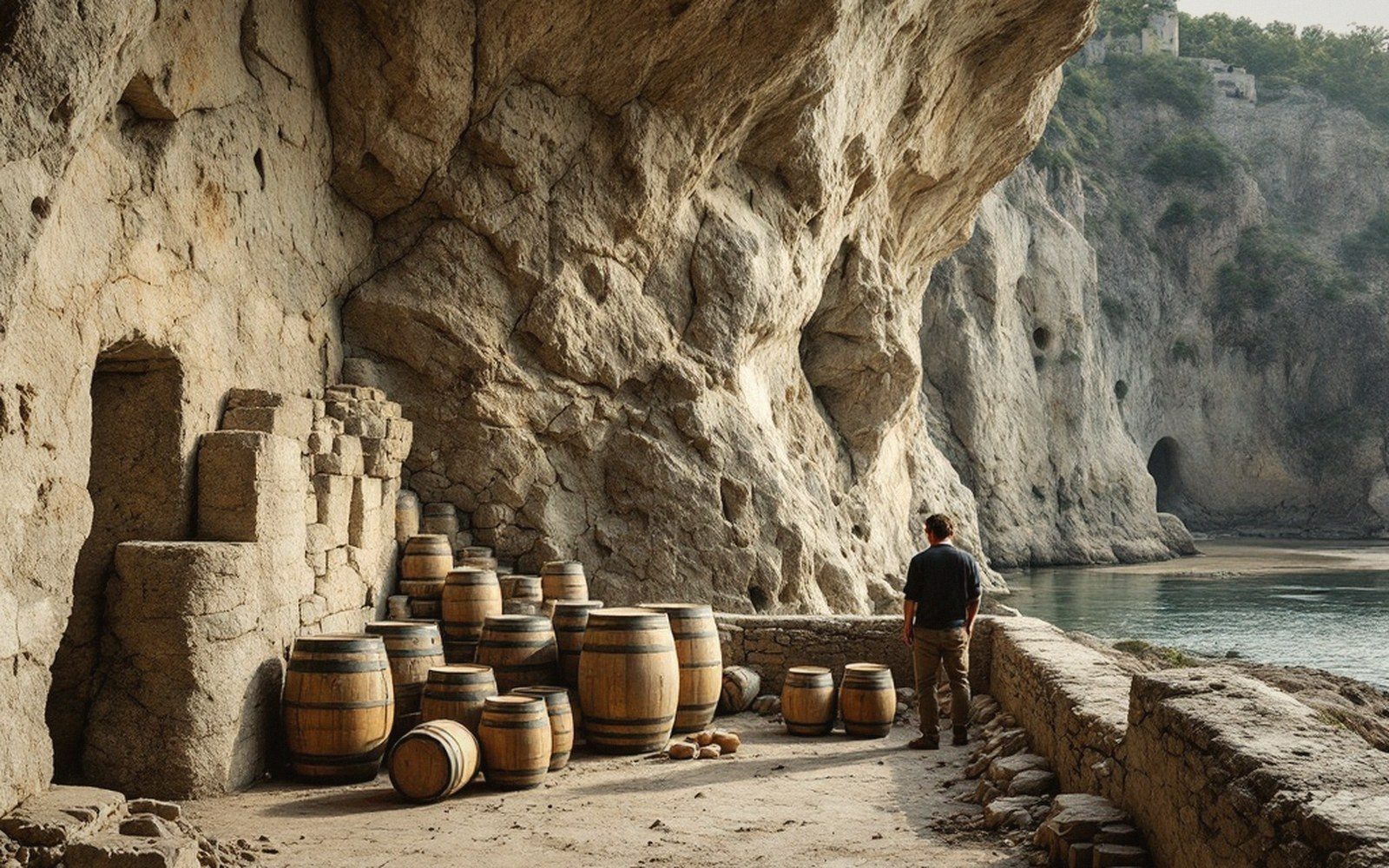
The Constant Temperature
Cut for stone, kept for cold: how the rock itself does the work of refrigeration.
The physics in the walls
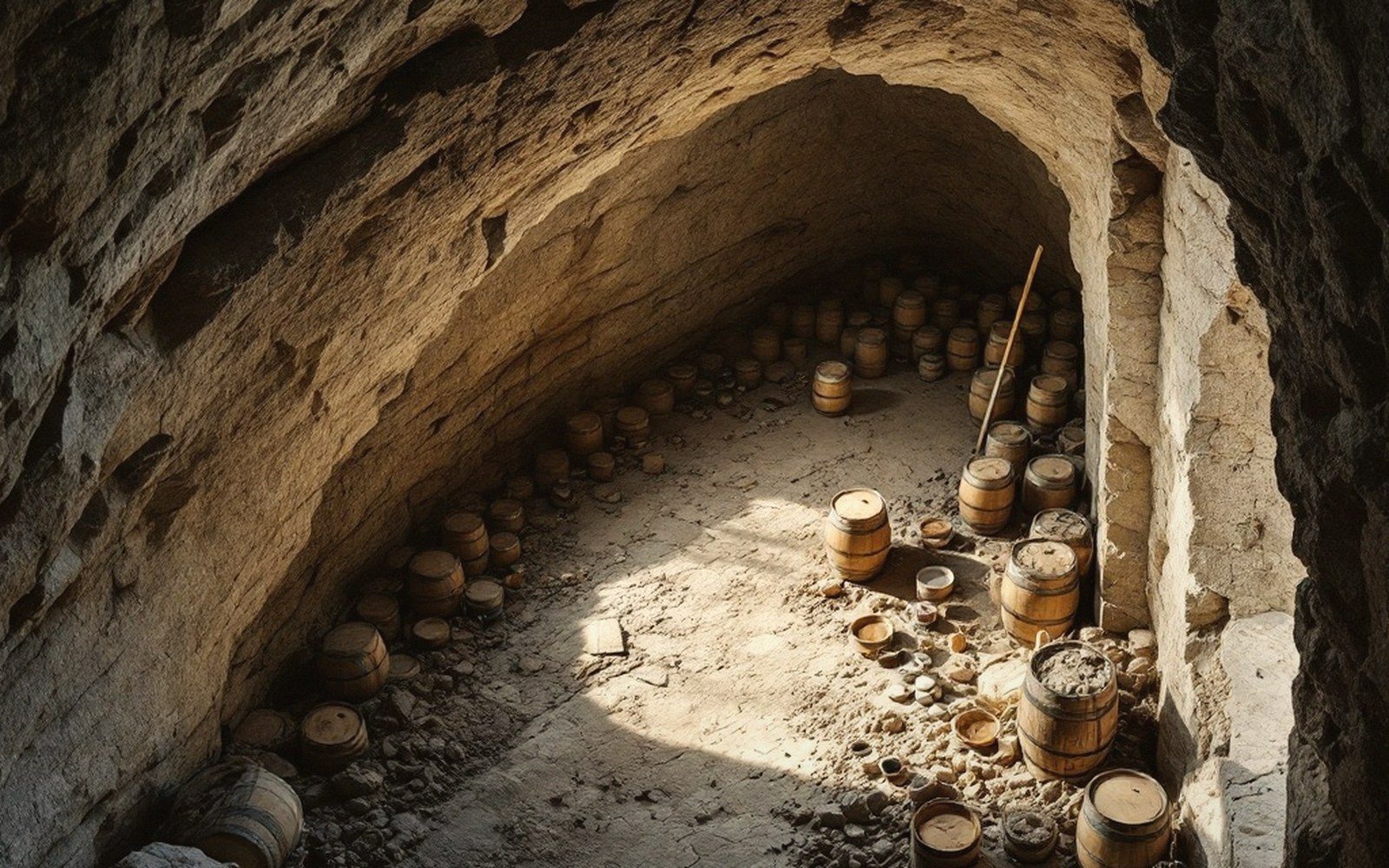
A limestone gallery excavated at a depth of eight to twelve metres below the surface settles, within a season or two of opening, into a thermal equilibrium that barely shifts across the year. The rock mass surrounding it is too large and too slow-conducting to follow the swings of the air above. Surface temperatures in the Gironde range from a few degrees in January to well above thirty in a hot August; inside the galleries the ambient temperature holds somewhere between twelve and fourteen degrees Celsius regardless of what the weather is doing overhead. No machinery, no insulation batts, no intervention of any kind — just mass.
That stability is not uniform silence. The galleries breathe very slightly with barometric pressure, and the relative humidity runs high, often above ninety percent, because the stone is never entirely dry. Water migrates slowly through the limestone — the same porosity that made it workable with a hand saw is the porosity that holds moisture — and evaporation at the gallery walls keeps the air dense and cool. The combination of low temperature and high humidity is, by a considerable margin, the most cost-effective cold store that any builder could inherit.
The people of Bourg understood this before they had a vocabulary for it. Once extraction moved on and a gallery was no longer productive as a quarry, the question was never whether the space would be used but only what it would hold. Wine, mushrooms, storage and shelter followed in successive waves, each exploiting the same physical fact. The calcaire — the regional soft limestone — gave up its blocks to build Bordeaux and left behind a conditioned void that required no further engineering to be useful.
There is a secondary effect worth noting. Because the gallery walls are calcareous — alkaline — they buffer the humidity slightly, resisting the sharp acidic swings that would damage sensitive stores. The rock does not merely hold a temperature; it moderates chemistry as well. A wine cellar carved into chalk or limestone is not simply a fashion. It is a working relationship between porous stone, groundwater and the slow thermal mass of the earth, arrived at empirically long before any of it could be measured.
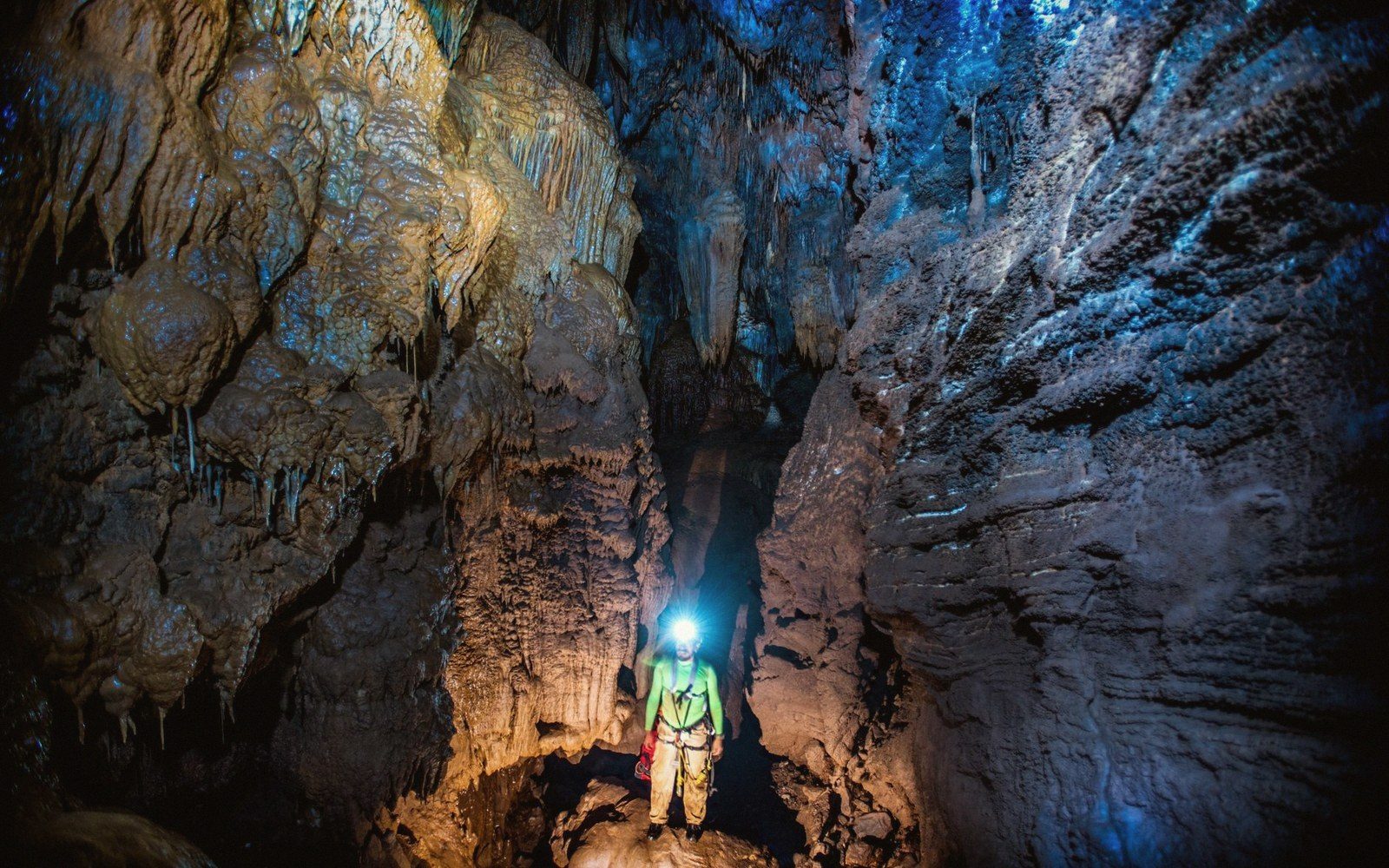
The worked-out galleries at Bourg are shallow enough that the cellars often connect directly to the ground floors of the houses above them, sometimes through an original extraction shaft, sometimes through a door cut later. The thermal benefit transfers upward — houses built over galleries are cooler in summer, less prone to damp in winter. The cut face gives twice: once in stone carried downriver, once in cold kept in place.
A wine cellar carved into chalk or limestone is not simply a fashion.