What galleries became
Wine, mushrooms, storage and shelter — successive uses of the same void.
A void is too useful to leave empty
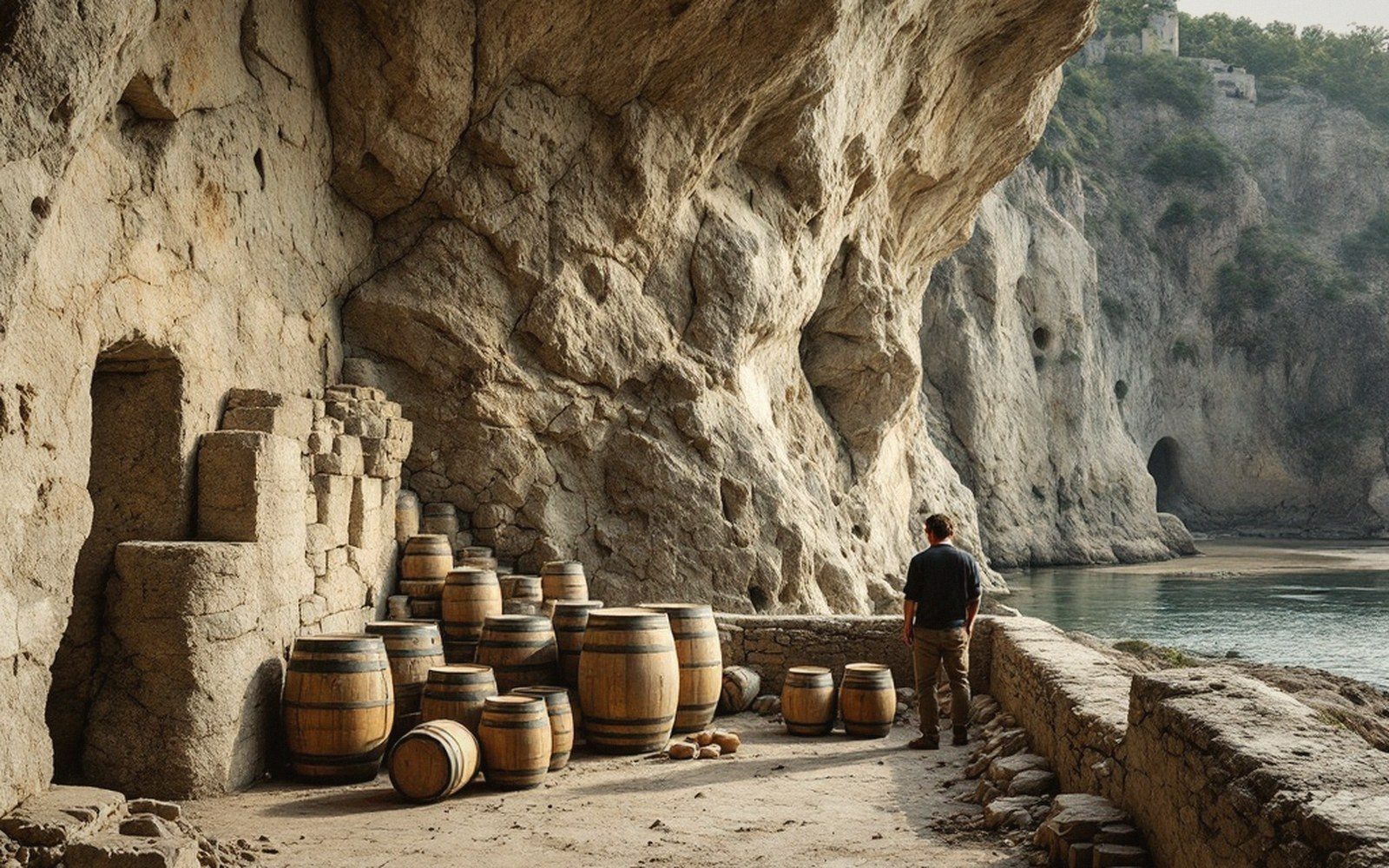
Cut stone leaves a gap. At Bourg, it left a great many — long parallel galleries running back from the cliff face, ceilinged in rock, floored in the debris the quarrymen did not bother to carry out, held up by the pillars they chose not to take. When the working face moved on or the seam ran thin, the question was never whether the space would find a new purpose, but which one it would find first.
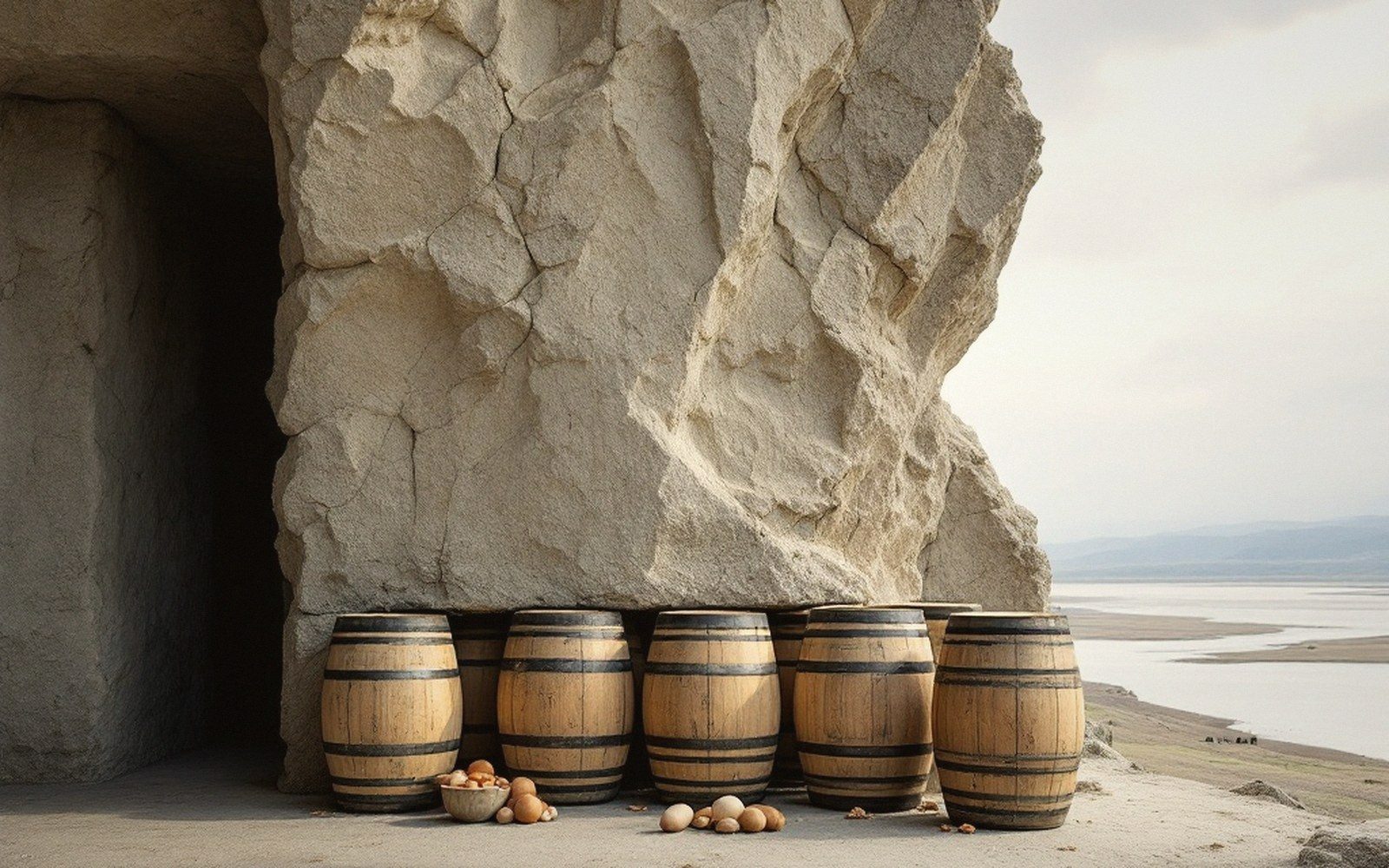
The answer, almost everywhere, was wine. Bourg sits at the northern edge of the Bordeaux vineyard and the limestone plateau above the town has been planted with vines for centuries. What the cellars beneath offered was precisely what a maturing wine requires: darkness, still air, and a temperature that neither climbs in summer nor falls hard in winter. The rock itself moderates the air. Because the thermal mass of several metres of solid limestone above and around a gallery absorbs seasonal variation almost entirely, the temperature inside stabilises at something close to twelve degrees Celsius year-round — cold enough to slow oxidation, warm enough not to freeze a barrel. No refrigeration unit achieves the same constancy without running continuously; the rock does it for nothing.
So proprietors on the plateau, and later négociants in the town, began storing barrels and bottles in the galleries as naturally as they might have stored them in any cellar — except these cellars were already built, by someone else, at considerable effort, for an entirely different purpose. The quarrymen had done the hard excavation; the vignerons simply moved in. In some cases, gallery mouths were fitted with rough doors or iron grilles, the floor was levelled slightly, and that constituted the conversion. The stone required nothing further.
Other occupants
Wine was never the only tenant. The combination of stable humidity, constant temperature and darkness that suits a barrel also suits a fungus, and at various periods the galleries hosted mushroom cultivation — champignons de Paris, the common white mushroom, grown on beds of composted manure laid along the gallery floors. This use was widespread in the tufa and limestone workings of the Loire valley and spread into other regions with comparable geology. Bourg's galleries were not exempt. The crop required little light, modest labour, and the steady atmospheric conditions the rock provided without effort. Whether this was done commercially or at the scale of domestic supply varied, but the principle held across all of it: the quarry's waste space was, by accident of physics, a controlled environment.
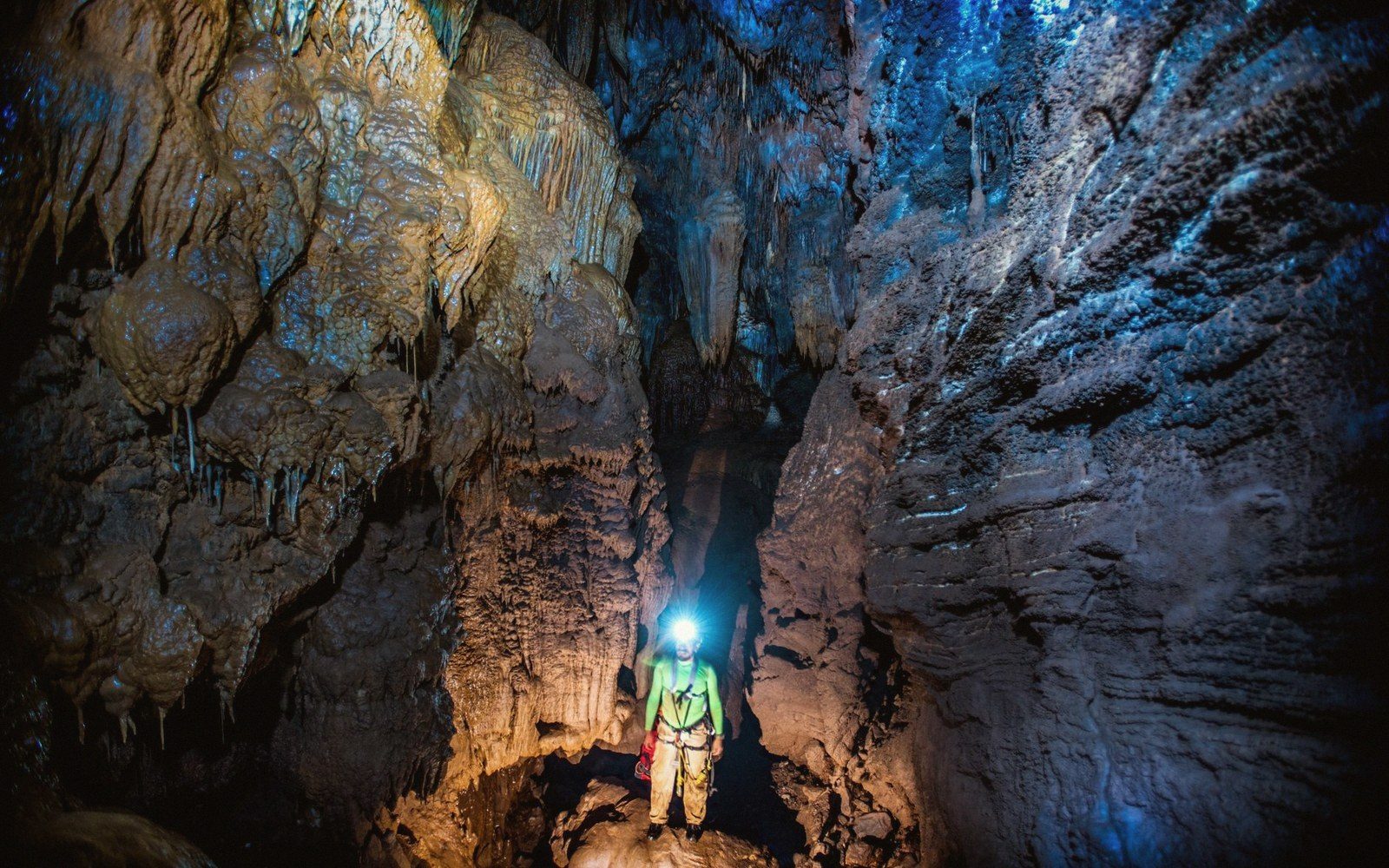
Storage of a more general kind followed from the same logic. A gallery with a good entrance and a dry floor was useful for anything that benefited from cool and shade — root vegetables over winter, salted fish, oil in bulk. In times of conflict the galleries offered shelter more urgently than storage: deep enough into the cliff to muffle artillery, already excavated, already large enough to move through. The citadel that stands on the cut face above had military purposes; the galleries beneath were not overlooked when those purposes became pressing.
What changed over time was not the usefulness of the void but the ownership and formality of its use. Early on, access was simply a matter of knowing where the openings were. Gradually, the galleries closest to houses passed into private use as household cellars, and a legal and cadastral relationship — however imprecise — grew up around them. The survey that might have resolved exactly which void belonged to which plot was, characteristically, never quite completed; cellars under houses in Bourg remain a partially mapped reality even now.
The citadel that stands on the cut face above had military purposes;
The galleries further from habitation, those that open along the foot of the cliff where the rock face meets the estuarine flat, stayed in more ambiguous condition — used occasionally, claimed loosely, visited by people who were not always doing what they said they were doing. Their primary function in recent memory has been to exist: to stay cool, stay dark, stay standing, and wait for whatever the next century decides a cavity in good limestone is worth.
The quarrymen who left them thought in tonnes and tides. The people who came after thought in barrels and bottles and baskets of mushrooms. The rock was indifferent to all of them, and went on holding up the street above.