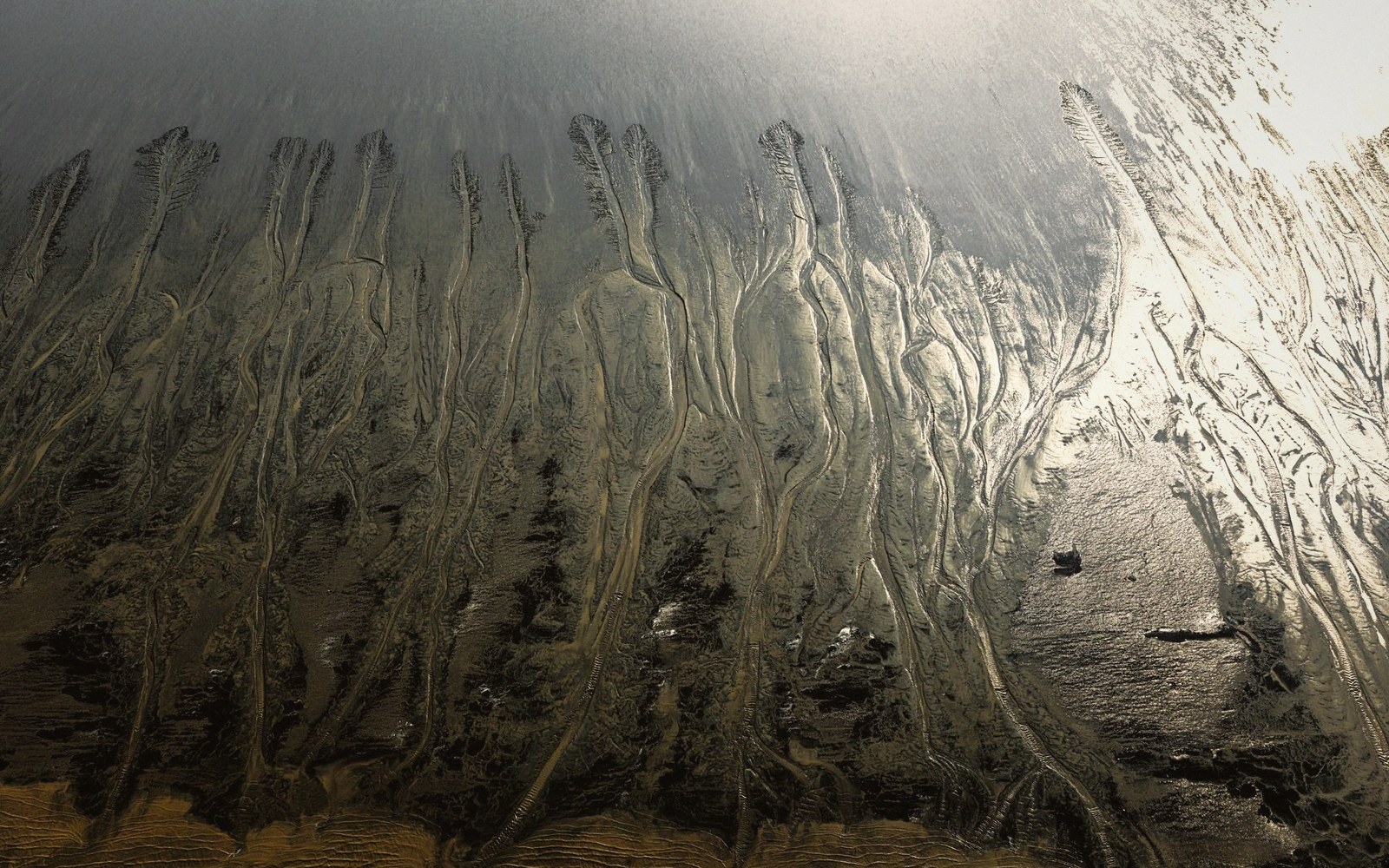
The Confluence
Where two rivers surrender their names and become something else entirely.
Where the rivers end
A few kilometres south of Bourg, the Dordogne bends west to meet the Garonne coming up from Bordeaux. Neither river survives the meeting. What forms downstream of that junction is the Gironde — the largest estuary in Western Europe, roughly eighty kilometres long and up to twelve kilometres wide at its mouth. Both rivers are substantial on their own terms; together they become a different order of thing.
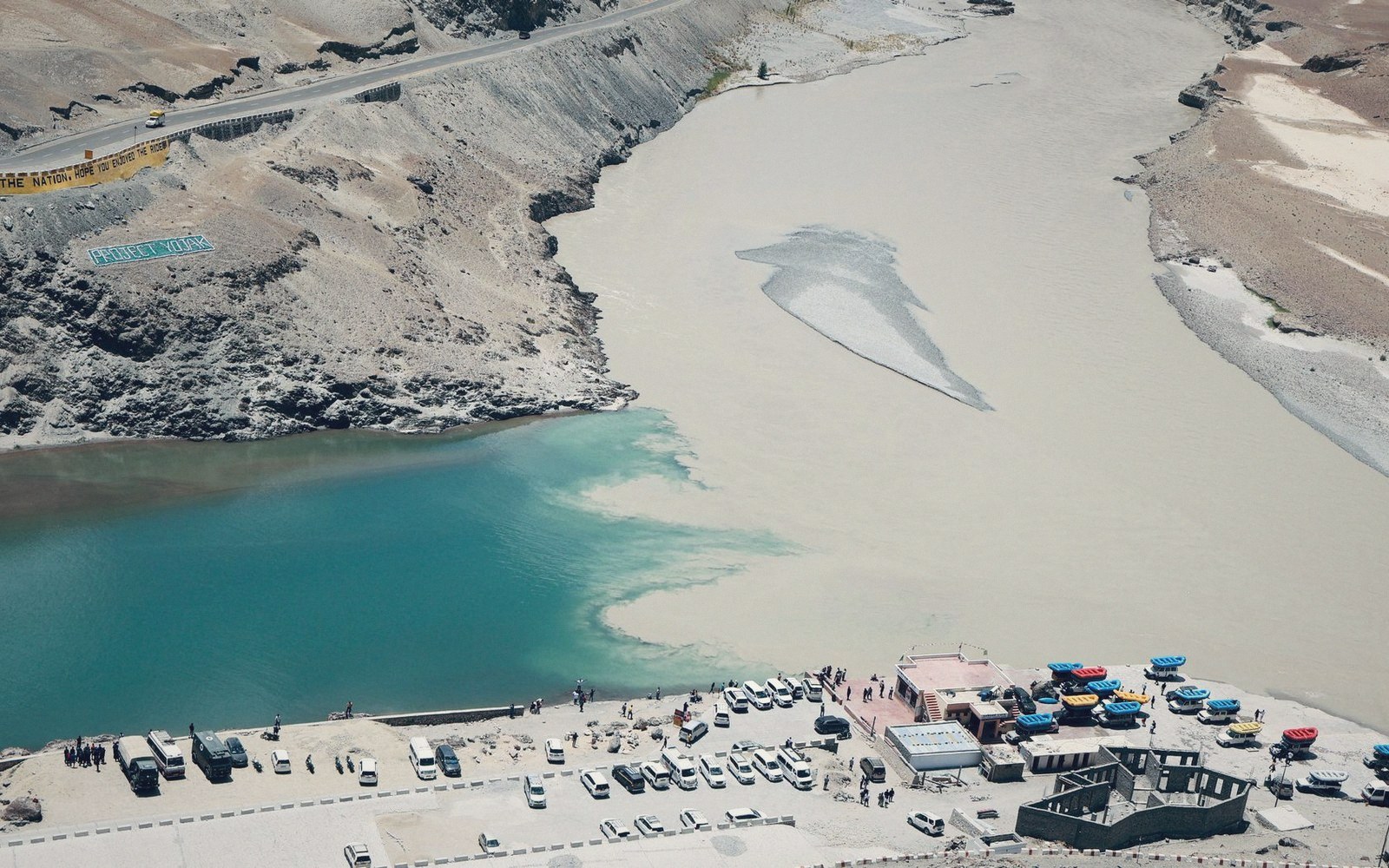
The precise point of confluence sits near the village of Bec d'Ambès, a low, flat promontory of alluvial land that the rivers have built from their own sediment and could as easily reclaim. There is nothing monumental about it from the ground. From above, the merging is visible as a colour difference — the Dordogne carrying darker, peat-tinted water from the Massif Central, the Garonne running greener from the Pyrenean catchment. The two tones take some distance to fully homogenise, and in certain light the seam between them holds.
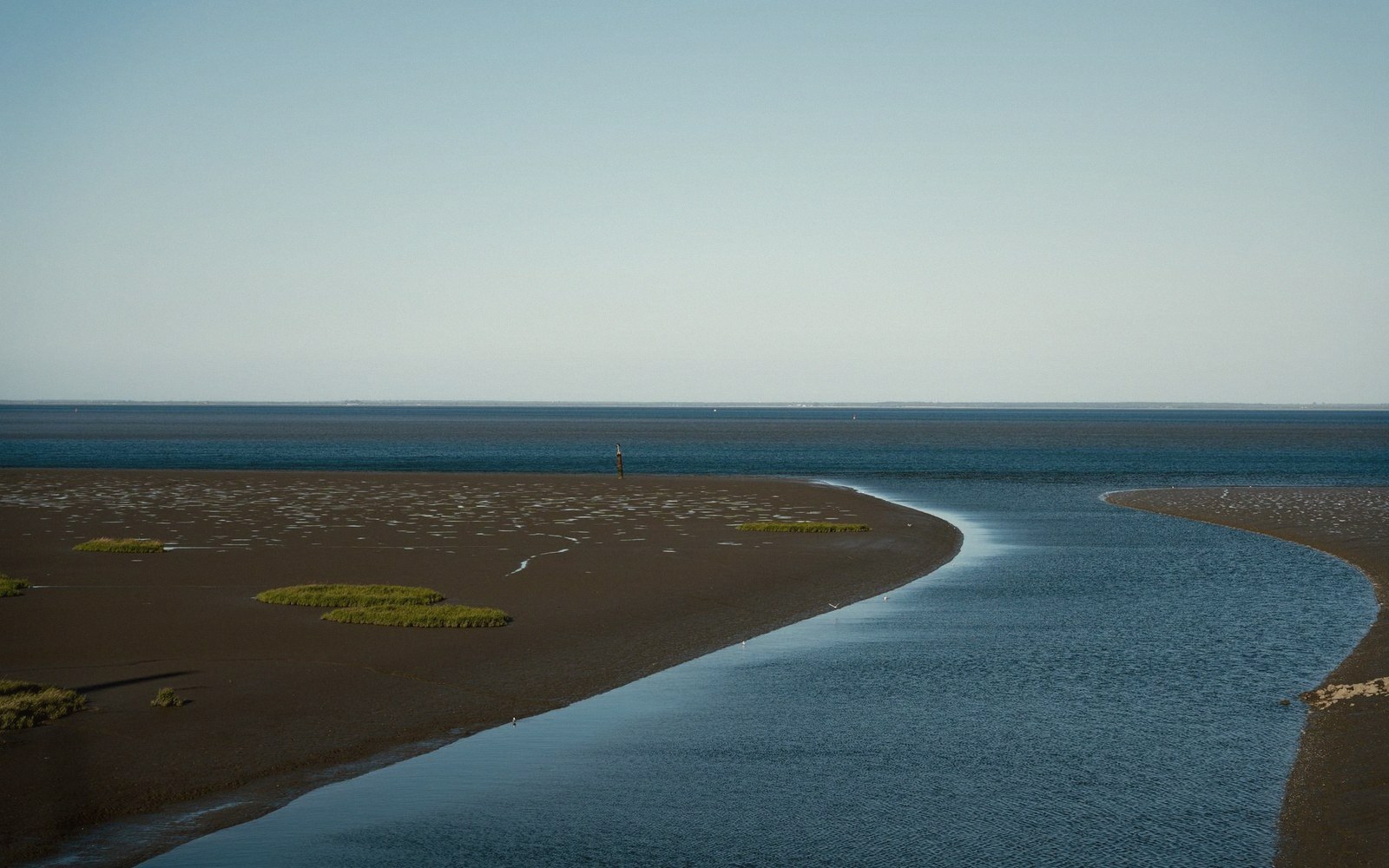
What changes at the confluence is not just chemistry but behaviour. Both rivers already carry the tide well inland — the Dordogne is tidal well beyond Libourne, the Garonne past Bordeaux — but once combined, the tidal signal is amplified. The Gironde's funnel geometry compresses the incoming Atlantic water as the estuary narrows upstream, driving the largest tidal range found anywhere on the French Atlantic seaboard. Spring tides produce vertical movements that are not merely dramatic but mechanically significant: they set the pace for everything that has ever been loaded or unloaded along this shore.
From Bourg, the confluence is close enough that the town has always sat at the edge of estuarine behaviour rather than river behaviour. The current reverses. Salinity fluctuates. The mudbanks shift. The quarrymen who cut stone beneath the town and floated it downriver on the flat-bottomed barges built for this water understood that timing the tide was as important as cutting the stone itself.
What changes at the confluence is not just chemistry but behaviour.