Weathering in a facade
The stone that cut easily in the gallery meets something it was never trained for: open air, rain and a city's particular chemistry.
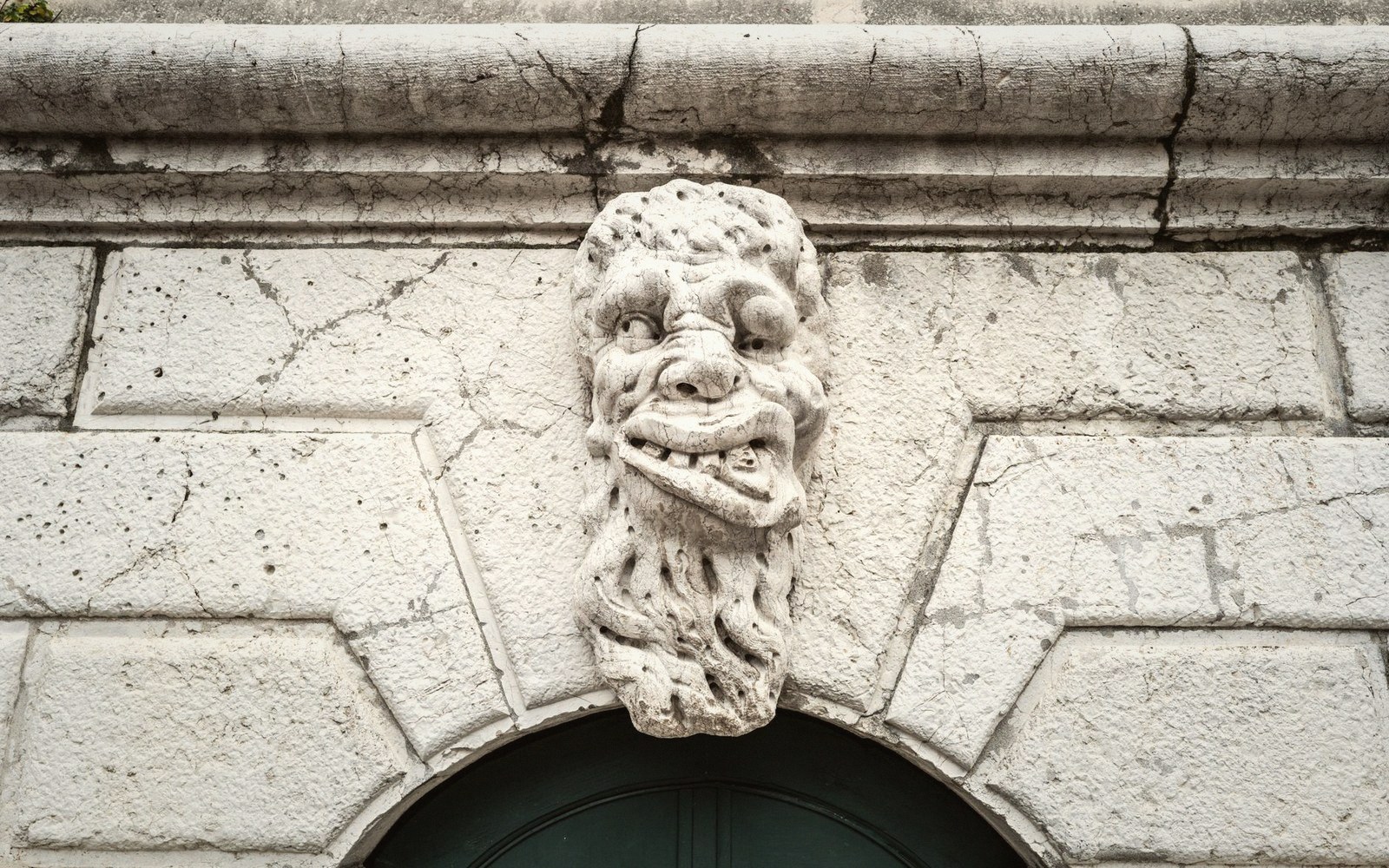
The same bed, a different life
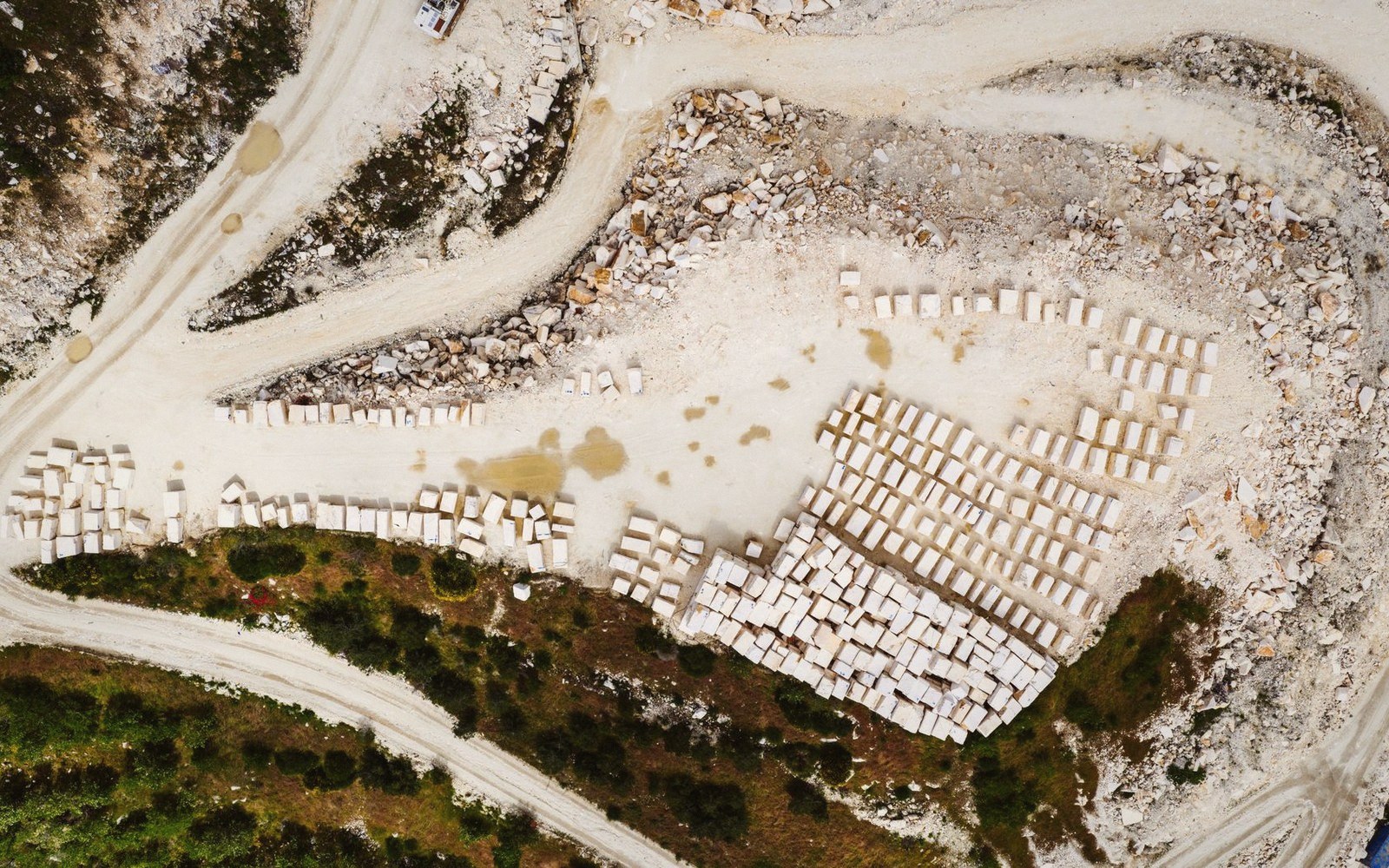
Freshly quarried, the fine-grained Bourg limestone is soft enough to cut with a hand saw. That workability is the point — blocks come off the face square and true, loaded onto a gabare (the flat-bottomed river barge), and carried downriver to face the quays and façades of Bordeaux. By the time mortar has set, the stone has already begun to change.
The mechanism is calcite. Limestone is largely calcium carbonate, and calcium carbonate reacts with carbonic acid — the weak acid that forms whenever rainwater absorbs atmospheric carbon dioxide. In a working quarry gallery, humidity is high and stable, CO₂ concentrations are low, and the stone faces nothing more aggressive than the occasional seep. On a city façade, rain arrives intermittently but repeatedly, each cycle dissolving a thin skin and carrying it away. The surface retreats. Over centuries, sharp arrises — the crisp corners left by the saw — soften and round.
Coastal air compounds this. The estuary at Bourg sits at the edge of an Atlantic system with a tidal range that exposes enormous areas of sediment and open water twice a day. Salt aerosols travel inland, and chloride ions work into the stone's pore structure. When moisture cycles through, salts crystallise and expand, opening existing microfractures. On a Bordeaux street, the same process runs on centuries of traffic exhaust, sulphur compounds and particulates, all of which darken the surface and accelerate chemical weathering in a process called sulphation — the conversion of calcite to gypsum at the exposed face.
The bed itself matters too. Limestone laid down in shallow marine conditions is rarely uniform. A single block may contain fossil-rich zones, silica-rich patches or subtle variations in porosity that behave differently once exposed to weather. What reads as one colour in the gallery can bleach unevenly across a facade, or hold moisture in bands that follow the original depositional layering. The geology of the Gironde estuary is written, slowly, across the walls of the city it was quarried to build — legible to anyone who knows what softness under a saw looks like, and can see its long-term consequences in stone.
By the time mortar has set, the stone has already begun to change.