Fishing Huts
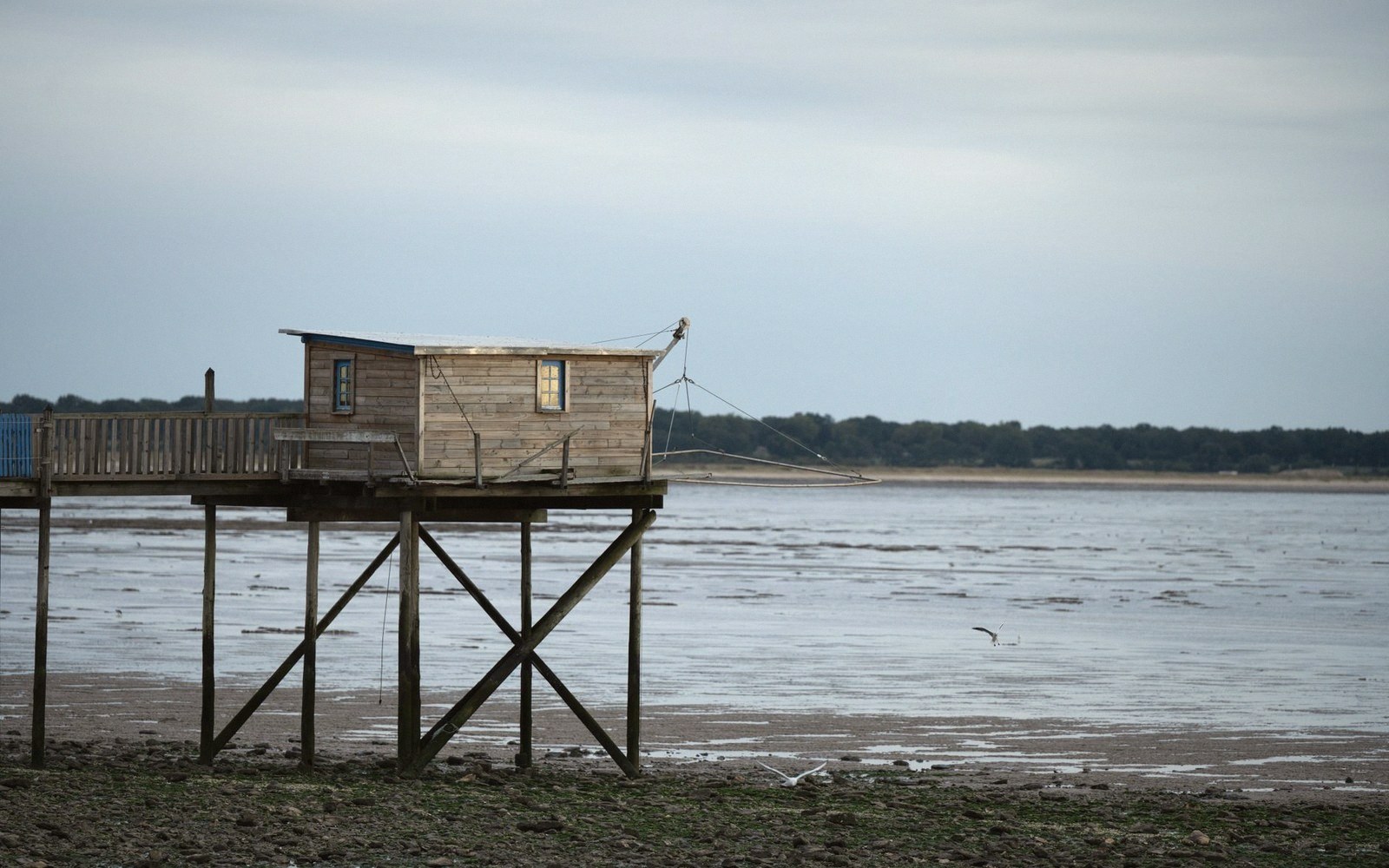
Carrelet platforms perched above the mud: square nets worked on the turn of the tide.
The geometry of an estuary edge
A carrelet — the regional word for these stilt-mounted fishing platforms — is a simple machine. A square net, perhaps five metres across, hangs suspended from a frame of crossed poles. When the tide falls and the current slackens, the net is lowered to the riverbed. When the tide turns and fish move with it, the net is raised, and whatever was resting or running above the mud comes up with it.
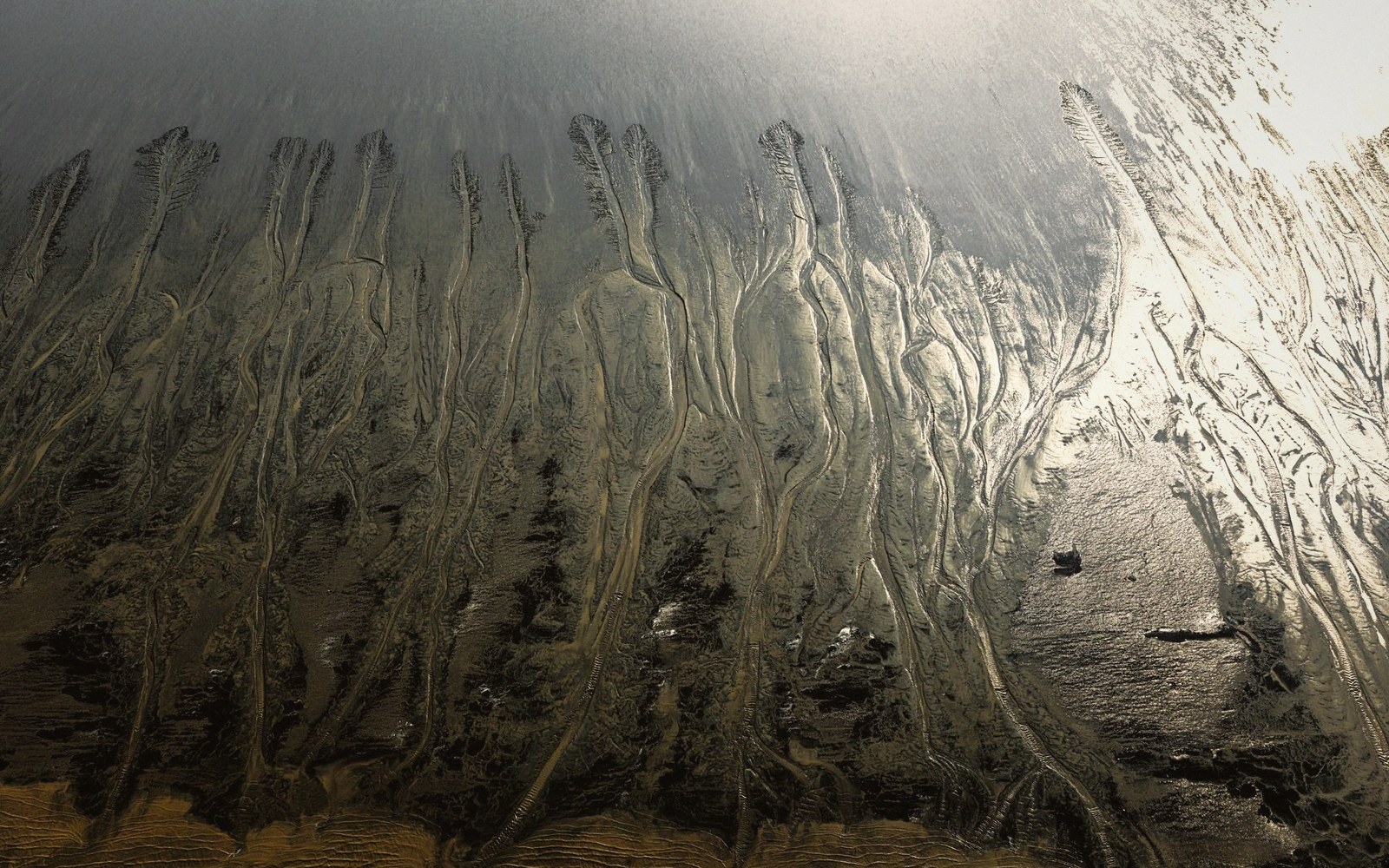
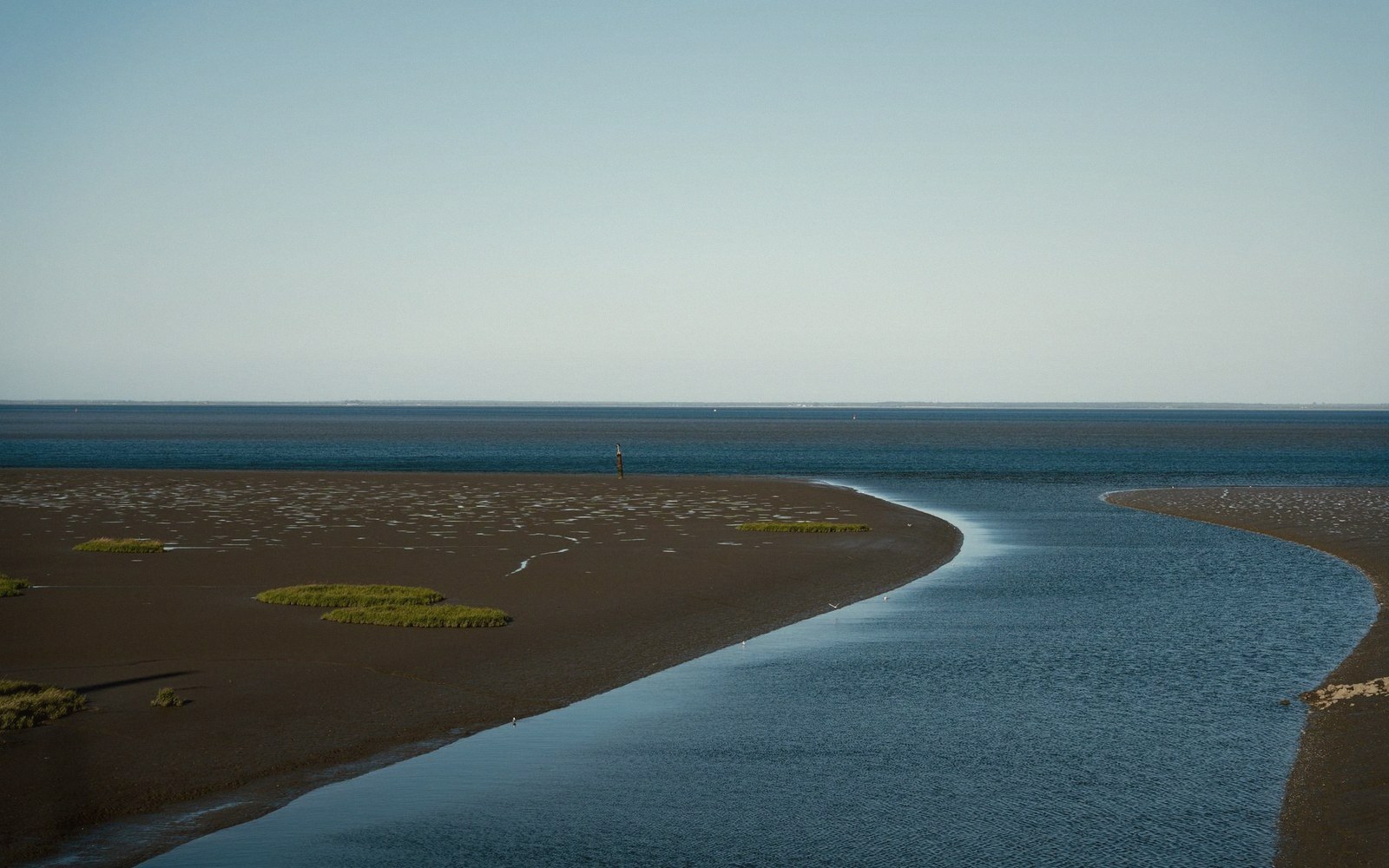
On the Gironde at Bourg, the tidal range makes this practical in a way it would not be elsewhere. Spring tides here have a large vertical range, among the biggest on the Atlantic seaboard, exposing wide shelves of pale silt between the cut limestone cliff and the navigable channel. The carrelets sit at the outer margin of that exposed ground, built on wooden poles driven into the mud, connected to the bank by a narrow walkway that doubles as a counterweight gantry.
The huts perched above the net frame are modest — single-room shelters of board and corrugated iron, just large enough to wait in while the tide does its work. Waiting is the point. Fishing by carrelet is not active; it is attentive. The fisherman watches the water rather than pursuing it, timing the haul to the moment of slack water when fish are least likely to feel the net rising beneath them.
The catches are estuary species: shad (alose) during their spring run upriver, lamprey on the same migration, mullet working the margins at any state of the tide. The stone cliff at Bourg stands almost directly behind some of these platforms — the same face that was worked for building stone now providing a backstop against the westerly wind.
The structures are fragile and seasonal, repaired each spring and sometimes lost in winter floods. They are not engineered; they are improvised around the estuary's behaviour, and they last only as long as someone is willing to maintain them.
When the tide falls and the current slackens, the net is lowered to the riverbed.